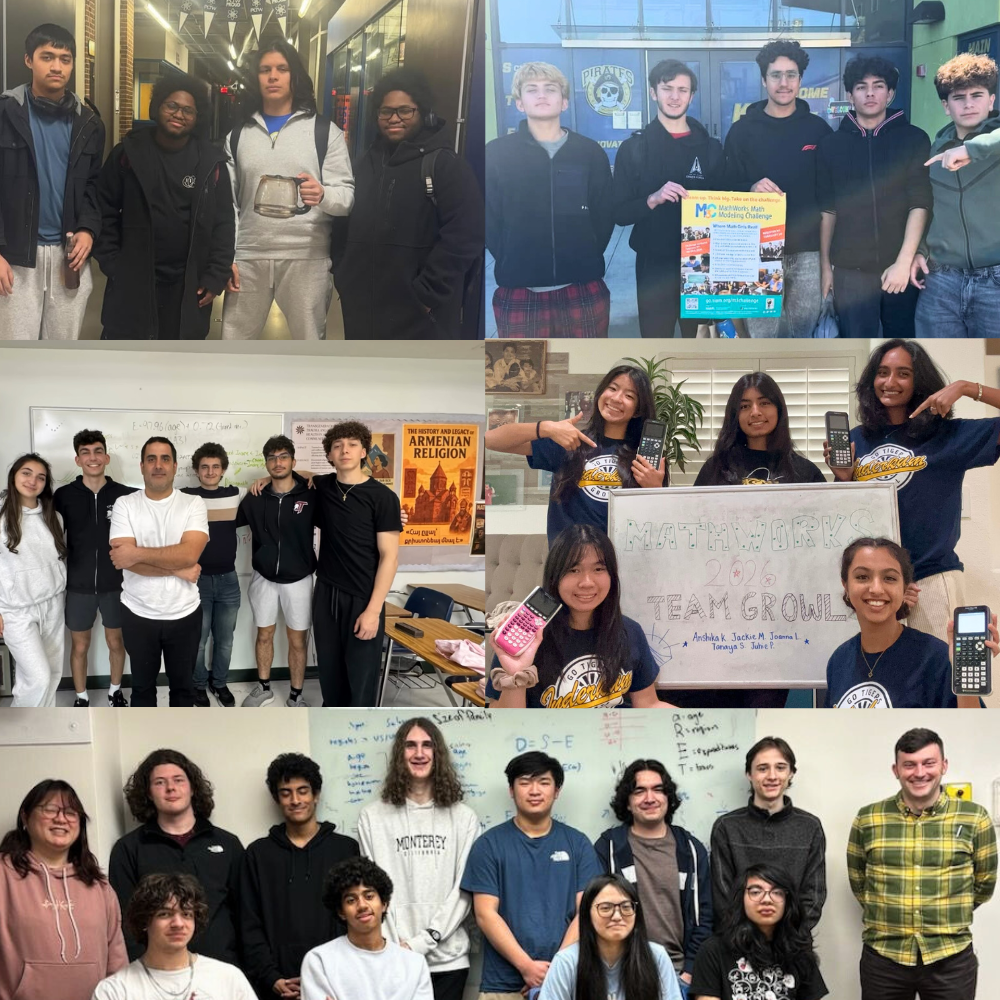
This past weekend, 770 teams—made up of more than 3,430 teenagers from the U.S. and U.K.—put their math skills to the test, tackling complex issues as part of MathWorks Math Modeling Challenge (M3 Challenge). Competing for a share of more than $100,000 (£75,000) in scholarships, these students used math and data to model gambling behavior and assess both financial risk and broader societal impacts.
Over the past decade, online and mobile sports gambling has exploded across the United States and United Kingdom, generating billions in revenue. Professional sports leagues and media outlets have voiced enthusiasm for this surge, with many attributing increased viewership and revenue to it. Yet, it has raised concern for others as its reach and accessibility create potential financial and societal risks. In search of innovative solutions, an international math organization turned to an unconventional yet creative source: high school students.
A program of the Philadelphia-based Society for Industrial and Applied Mathematics (SIAM), M3 Challenge is an annual, internet-based competition designed to inspire students to pursue careers in applied mathematics, computational science, data science, and technical computing.
“More and more, conversations around sports are filled with spreads, lines, and suggested parlays,” said Dr. Neil R. Nicholson, professor of the practice at the University of Notre Dame, and M3 Problem Development Committee member. “That got us thinking about gambling in all its aspects, and we eventually settled on app-based sports gambling for this year’s problem topic.”
“Our aim wasn’t to define the practice as good or bad, but to understand what role it has in today’s society,” Dr. Nicholson explained. “With so much discussion among younger generations focused on affordability and income, we looked at the intersection of disposable income and sports gambling and how that relationship differs across demographic groups. In the third part of the Challenge problem, we also asked teams to make their math ‘make sense’ to the general public to emphasize that mathematical modeling isn’t just about the models and analysis, but also about data literacy and communicating results in a way that is clear to broader audiences.”
SIAM turned to participating students for insight, looking for answers to questions such as:
- Should we be concerned as a society about the growth in online sports gambling?
- How much total money is being lost to sports gambling in the U.S. and U.K. yearly?
- How much is too much for an individual to spend on online sports gambling?
Teams had to submit their solutions, including an executive summary of their findings written in the form of a brief to local authorities, within 14 hours of downloading the problem, replicating the tight deadlines often demanded in the real world.
“The second we read the question, everyone on our team was immediately intrigued because of how prevalent the issue is, and also because it was related to sports,” said Amanda Aronowitz, student at The New School in Fairfax, Virginia. “I found the research for the second question about risk tolerance and how different demographic factors affect it really interesting, and I’ll definitely keep looking into this topic even though the competition is over!”
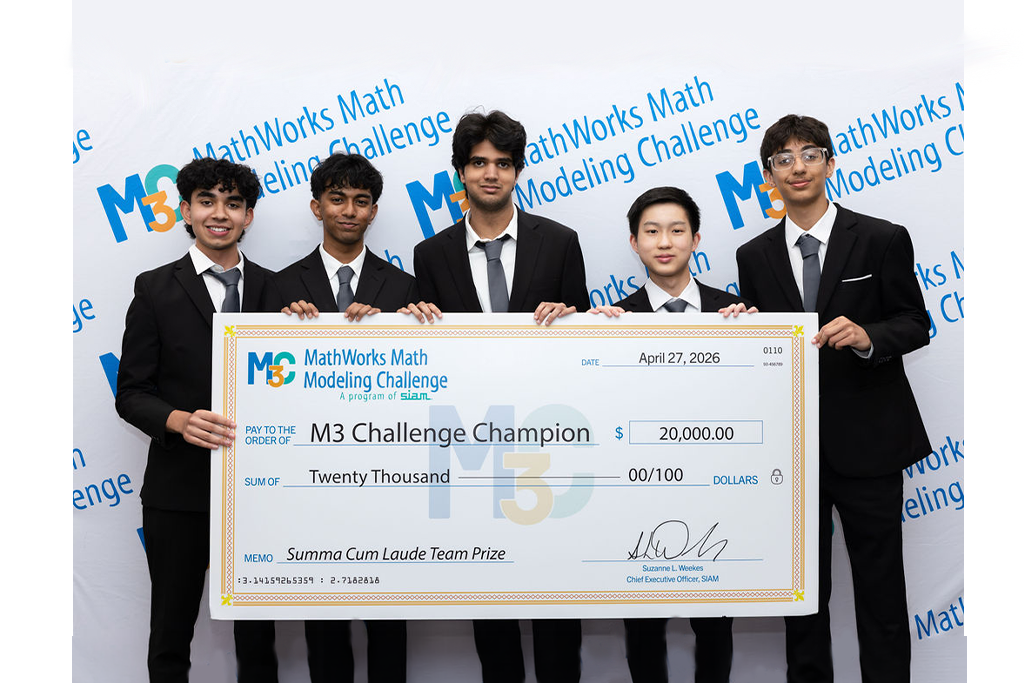
The students’ submissions will now be assessed by an international panel of expert applied mathematicians who will select six finalists from across the U.S., England, and Wales from the hundreds of participating teams. Finalist teams will receive an all-expenses-paid trip to New York City to participate in the competition’s final judging event, which will take place April 27.
37 awards will be given as scholarship prizes, with the champion team receiving $20,000.
“I am always impressed at the unique and challenging problems given each year that showcase the talent we have in the next generation of researchers,” said Dr. Matthew A. Beauregard, associate dean for faculty and administration and professor of computer science at Stephen F. Austin State University, and M3 Challenge judge. “This year was no different and the problem gave students even greater freedom to demonstrate their creativity as they explored the impacts of their model predications of disposable income and risk tolerance.”
“There was one moment when we all went off to figure out a model for the second question. We then came back and tried to explain what we found,” said Lucy Bachrack, student at The Grauer School in Encinitas, California. “It was fun because sometimes we underestimate how hard it is to communicate your thoughts to one another.”
View the 2026 problem statement. Learn more about M3 Challenge.
About Society for Industrial and Applied Mathematics
Society for Industrial and Applied Mathematics (SIAM), headquartered in Philadelphia, Pennsylvania, is an international society of 14,000+ individual, academic, and corporate members from 100+ countries. SIAM fosters the development of applied mathematics and computational methodologies needed in various application areas. Through publications, conferences, and communities like student chapters, geographic sections, and activity groups, SIAM builds cooperation between mathematics and the worlds of science and technology to solve real-world problems. Further information is available at siam.org.
About MathWorks
MathWorks is the leading developer of mathematical computing software. MATLAB, the language of engineers and scientists, is a programming environment for algorithm development, data analysis, visualization, and numeric computation. Simulink is a block diagram environment for simulation and Model-Based Design of multidomain and embedded engineering systems. Engineers and scientists worldwide rely on these products to accelerate the pace of discovery, innovation, and development in automotive, aerospace, communications, electronics, industrial automation, and other industries. MATLAB and Simulink are also fundamental teaching and research tools in the world’s universities and learning institutions. Founded in 1984, MathWorks employs more than 6,500 people in 34 offices around the world, with headquarters in Natick, Massachusetts, USA. For additional information, visit mathworks.com.
Media information or to set up interviews:
GBPR
Tel: 1-877-986-1340
Email: [email protected]