

Stay tuned for a webinar coming February 2026 hosted by SIAM for a conversation on this practice problem featuring problem author Dr. Jen Gorman.
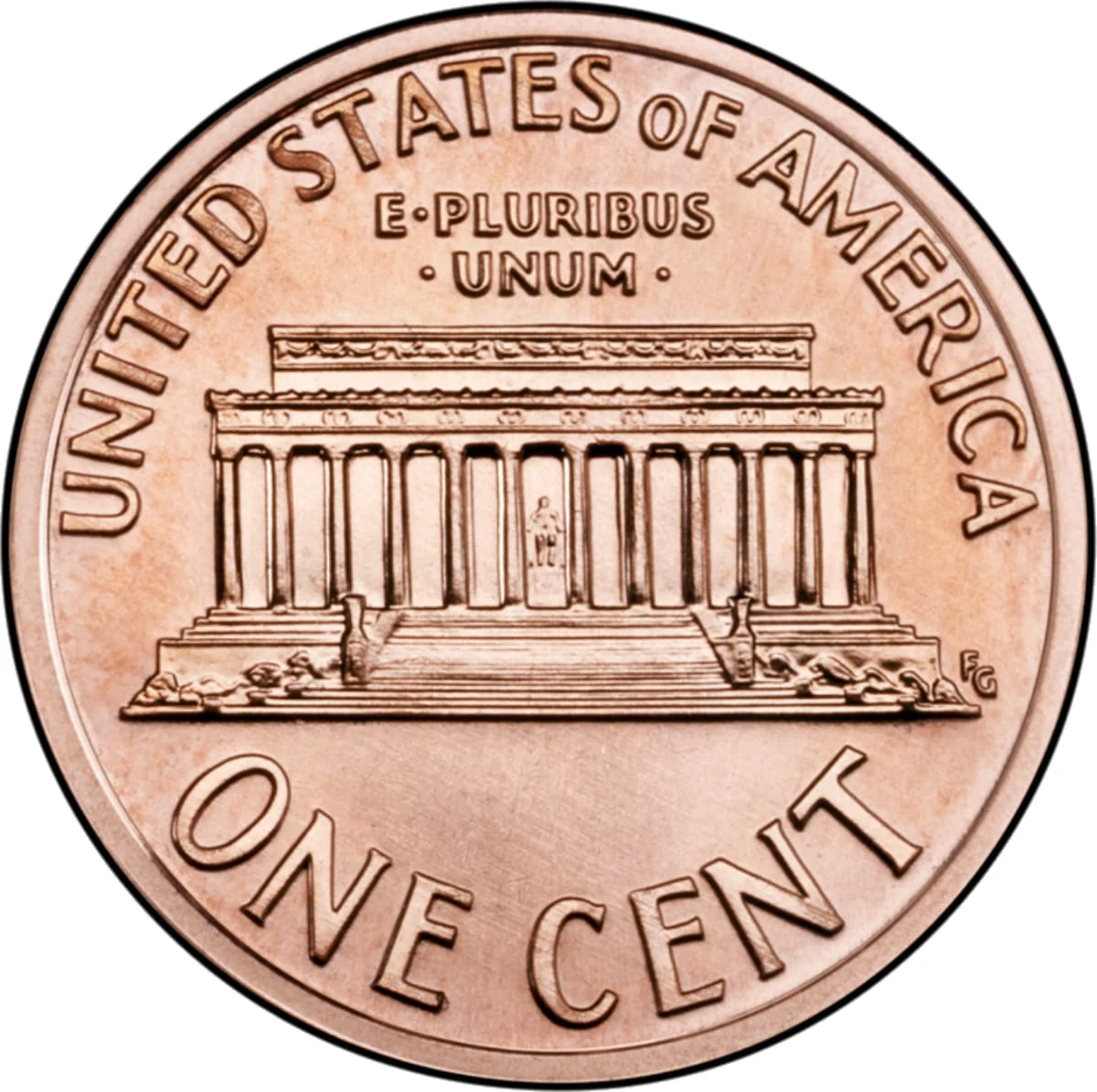
Using cash as currency has been on the decline for many years. In 2016 cash was used for 31% of payments while in 2022 just 18% of transactions used cash [1]. As this decline happens, it makes sense to consider if and when society will turn to a cashless system. While that question in itself involves a multitude of considerations and has countless social impacts, the first step towards going cashless would be to phase out the lowest monetary denominations.
For over a century, the penny has been a familiar part of everyday transactions in the United States. First minted in 1793, it remains the lowest denomination coin in circulation. As prices have risen and payment habits have shifted, however, the penny’s role has changed. Many countries (such as Canada, Australia, and New Zealand) have eliminated their smallest coins altogether [2]. In the UK, the half-pence was phased out in the 1980s [3].
Currently, the U.S. penny continues to circulate, albeit unevenly. Some pennies get tossed into junk drawers, as people often get them back as change but then don’t re-spend them. This is hardly a new problem. In 1974 there were appeals for people to get the pennies in their possession back into circulation [4].** People hoarding pennies means that the U.S. Mint must continuously mint new pennies at a production cost of more than the penny’s face value [5]. In 2024 alone, over 3.2 billion pennies were minted, and it is estimated that there are over 114 billion pennies in circulation with some estimates as high as 240 billion [6,7].
Recently, the U.S. mint officially announced that they would stop minting pennies in 2026 [8]. This leaves the future of the penny uncertain, with some interesting questions that can be addressed using mathematical modeling.
** The press release begins with the appeal: “I’m calling on every American to get the penny back in circulation and keep it there.”
Q1: Loose Change: How many pennies does the average American actually have in their possession? Take “possession” here to be broadly defined, including someone’s house, personal belongings, car, etc.
Q2: Change Purse The long-term phase out of the penny will begin in 2026 once the U.S. Mint ceases production of new pennies. Of the businesses that accept cash transactions, the number that accept the penny will decrease over time. Create a model that predicts the percentage of these businesses that will accept the penny x years after 2026.
Q3: Rounding Rules Without the penny, businesses will need to decide how to handle cash transactions that are not divisible by 5 cents, as is often the case after sales tax is added (equivalent to e.g., VAT in the UK). One option could be to round up to the nearest five cents, although this might encourage even fewer customers to use cash, since card transactions do not need to be rounded. Develop a model that helps you determine an optimal rounding strategy for business. How would things change if eventually the nickel or dime are phased out (i.e., so every transaction must be rounded to the nearest 10 cents or 25 cents)?
[1] Federal Reserve Bank of San Francisco, 2023 Findings from the Diary of Consumer Payment Choice, available at: https://www.frbsf.org/research-and-insights/publications/fed-notes/2023/05/2023-findings-from-the-diary-of-consumer-payment-choice/
[2] Martha C. White, Money.com, Trump’s Coin Toss: What’s Going to Happen When the U.S. Scraps Pennies? Available at: https://www.nasdaq.com/articles/trumps-coin-toss-whats-going-happen-when-us-scraps-pennies
[3] Vanessa Barford, BBC News, Halfpenny: The story of how a tiny, ‘annoying’ coin was abolished. Available at: https://www.bbc.com/news/magazine-2746767
[4] United States Mint, Mint Appeals for Return of the Penny. Available at: https://www.usmint.gov/learn/history/historical-documents/mint-appeals-for-return-of-the-penny
[5] United States Mint, Circulating Coins Production. Available at: https://www.usmint.gov/about/production-sales-figures/circulating-coins-production
[6] United States Mint, 2024 Annual Report. Available at: https://www.usmint.gov/content/dam/usmint/reports/2024-annual-report.pdf
[7] Kim McGrath, Wake Forest News, Why eliminating the penny makes sense. Available at: https://news.wfu.edu/2025/02/13/why-eliminating-the-penny-makes-sense/
[8] Connor Lee, Columbia Missourian, U.S. Treasury is ending the production of pennies. Here’s what that decision means. Available at: https://www.columbiamissourian.com/news/state_news/u-s-treasury-is-ending-the-production-of-pennies-heres-what-that-decision-means/article_f73bb122-68f7-402a-9983-b3bbf897902b.html
This problem was written by members of the Problem Development Committee: Dr. Jennifer Gorman, Lake Superior State University; Dr. Neil Nicholson, University of Notre Dame; Dr. Chris Musco, New York University.
Reference and other links included on this page were current and valid at time of original posting; if they are no longer valid or live please look for similar or updated links in context with the referenced topic.